
A virtual assistant (VA) handles administrative work for a business or a busy professional from home: email, calendars, documents, bookings and small projects. This article explains the tasks and tools, the difference between employed and freelance VA work, and how to land a first role in Canada.
What virtual assistants do
VA work ranges from general admin to specialised support. Many VAs start general and specialise later – in bookkeeping support, social media, e-commerce or executive assistance. The work is listed among beginner-friendly roles in our guide to entry-level remote jobs in Canada.
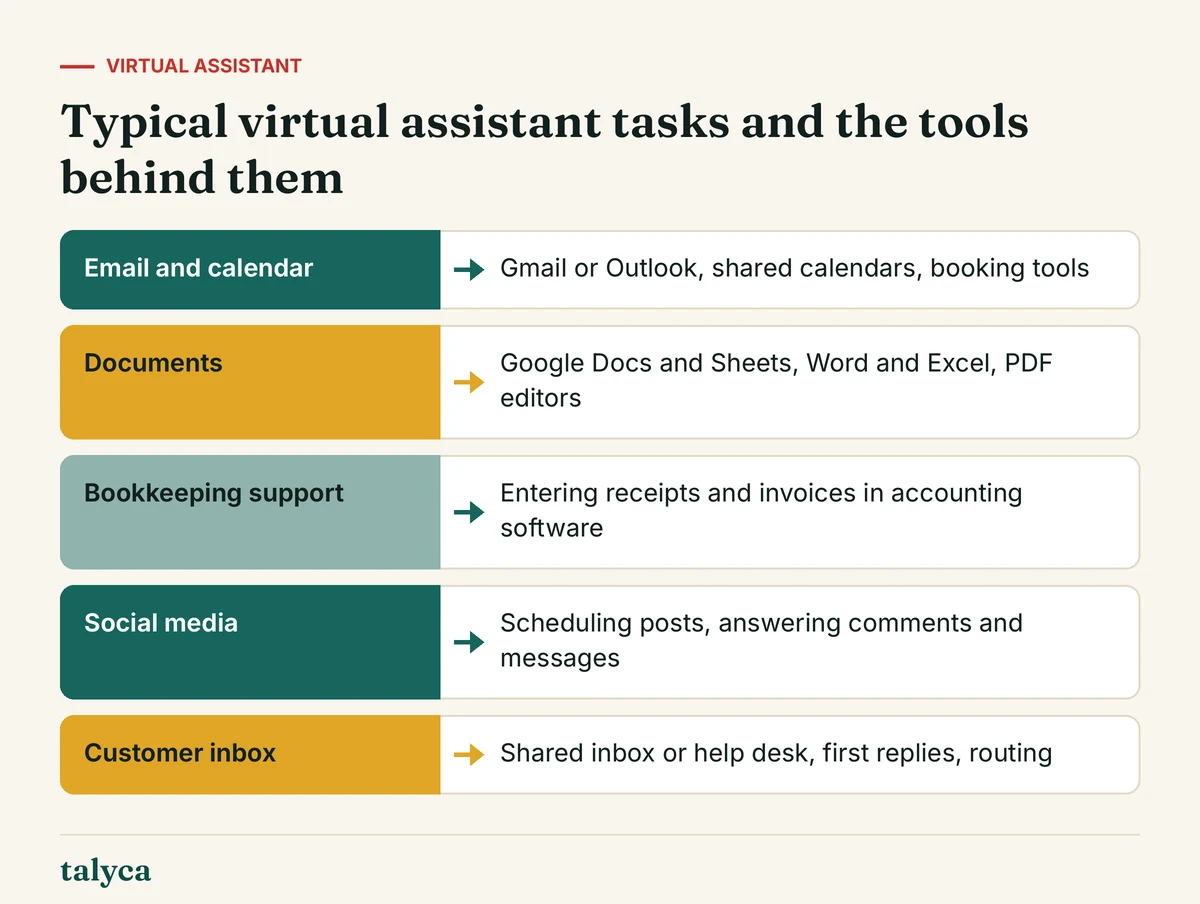
What connects all of these is trust. You’ll often have access to someone’s inbox, calendar and documents, sometimes to client data. Discretion and reliability matter as much as speed.
Employed or freelance?
| Employed VA / remote admin | Freelance VA | |
|---|---|---|
| Work comes from | One employer | Several clients |
| Pay | Wage or salary, deductions withheld | Hourly rate or monthly retainer, invoiced |
| Hours | Set by the employer | Agreed with each client |
| Taxes and CPP | Deducted by the employer | You pay them yourself, possibly GST/HST |
| Security | Employment standards, notice | Only your contracts |
Beginners often find it easier to start in an employed remote admin or assistant role and freelance later, once they have references. If you go freelance, read freelancing in Canada and our guide to invoicing as a freelancer.
Skills clients and employers look for
- Written communication: clear, polite emails on someone else’s behalf.
- Organisation: managing calendars across time zones, keeping track of deadlines, filing documents so others can find them.
- Tools: Google Workspace or Microsoft 365, a scheduling tool, a password manager, a project board such as Trello or Asana.
- Judgment: knowing what you can decide alone and what to ask about.
- Data care: handling personal and financial information carefully and not reusing it for anything else.
How to get a first VA role
- Choose a starting focus – for example, admin support for small businesses or scheduling for professionals.
- Build two small samples: a clean process document (“how we onboard a new client”) and an organised spreadsheet or calendar template. Keep them free of real people’s data.
- Translate past experience: front-desk, retail, office or volunteer coordination experience is directly relevant.
- Apply to remote assistant and admin roles with a tailored resume – see applying for remote jobs.
- If freelancing, start with a small, clearly defined package and a written agreement.
Fake VA offers: a “client” who needs you to buy gift cards, receive payments into your account or pay for software before starting is running a scam. Real clients pay you – see remote job scams.
Where the work can lead
Experienced VAs move into executive assistant, office manager, operations coordinator or project coordinator roles, or build a freelance practice with a specialty such as bookkeeping support or podcast production. Keeping a record of the processes you built and the time you saved clients makes each step easier to argue.
Common questions
How much do virtual assistants earn in Canada?
Employed remote assistants are paid in line with administrative roles in their province; freelance VAs set their own hourly or monthly rates. Check Job Bank wage data for administrative assistants to see typical ranges in your region.
Do I need a certificate to become a VA?
No certificate is required. Office administration courses can help, but samples of your work and references matter more to most clients.
How do freelance VAs find clients?
Through their network, referrals, freelance platforms and job boards that list contract roles. Clear packages and a simple website or profile make it easier for clients to say yes.
More on this topic: our guide Entry-Level Remote Jobs in Canada: Starting Without Experience puts this article in context.