
IT help desk is the most accessible way into a tech career, and much of it can be done remotely: resetting access, troubleshooting laptops and software, and guiding colleagues through problems over chat, phone or remote session. This article explains the work, how support tiers fit together, which skills and certifications help, and where the job leads.
What a remote help desk analyst does
Help desk analysts (also called service desk analysts or IT support specialists) are the first point of contact when something breaks. Remote analysts support employees who are themselves often remote, so almost everything happens through tickets, chat, phone and remote-control tools. Our guide to remote tech jobs in Canada places the role among other tech paths.
Typical tickets:
- Password resets, locked accounts and multi-factor authentication problems.
- New employee setup: accounts, laptop, software, access permissions.
- Email, VPN, printer and video-call issues.
- Software installation and updates through management tools.
- Recognising phishing reports and escalating security incidents.
How support tiers fit together
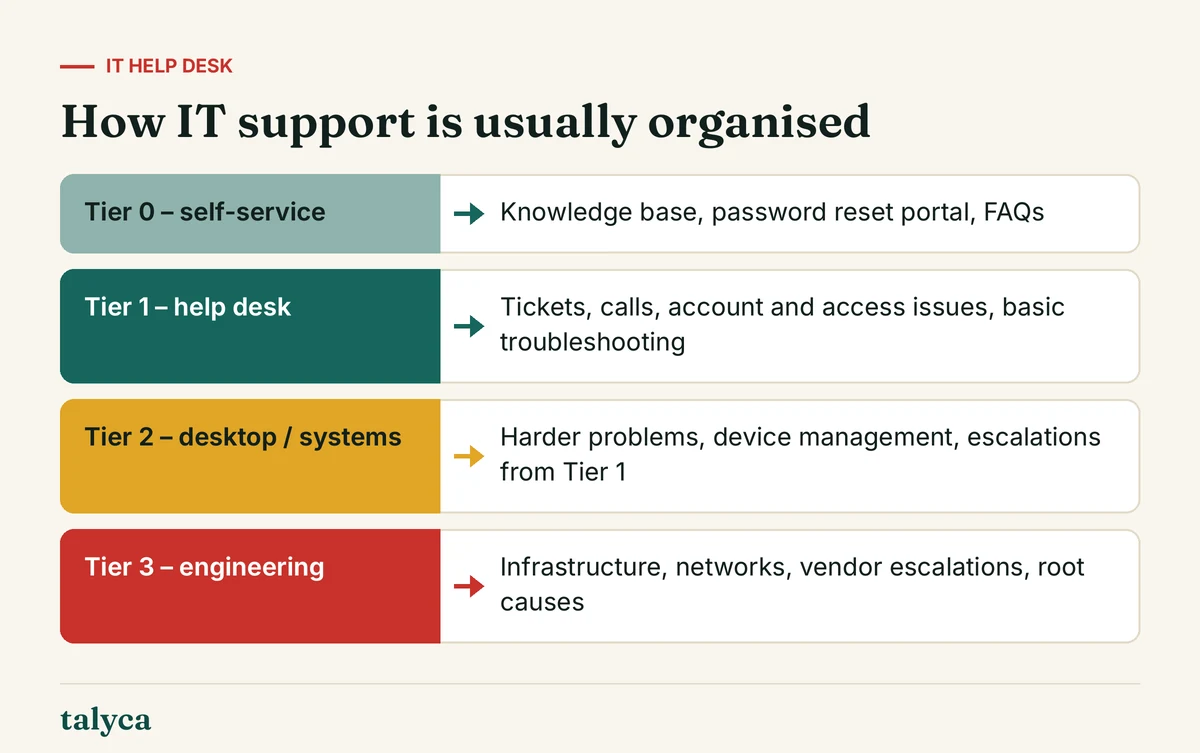
Tier 1 solves the common problems quickly and documents everything else well enough that Tier 2 doesn’t have to ask again. Good ticket notes – what the user reported, what you checked, what you tried – are one of the most valued skills on any help desk team, and they’re what gets people promoted.
Skills that get you hired
| Area | What to know at entry level |
|---|---|
| Operating systems | Windows and macOS settings, user accounts, basic command line |
| Identity | Directory basics (users, groups), password and MFA resets |
| Productivity suites | Microsoft 365 or Google Workspace administration basics |
| Networking | IP addresses, DNS, Wi-Fi vs. wired, VPN troubleshooting |
| Ticketing | Working a queue, priorities, service level targets, writing notes |
| People | Explaining technical steps calmly to non-technical colleagues |
Customer service experience counts: a help desk is support work with a technical focus, and many analysts come from roles like those described in remote customer service jobs.
Do certifications help?
In IT support, entry-level certifications are widely recognised by employers – vendor-neutral IT fundamentals certificates, or entry-level Microsoft or Google IT certificates, for example. They aren’t mandatory, but they give a career changer a structured way to learn and something concrete on the resume. Check current prices and exam content on the certifying organisation’s website.
Build a small home lab
Hands-on proof beats a list of courses. A home lab can be one old computer or free virtual machines:
- Install and configure a Windows and a Linux virtual machine.
- Set up a small directory or cloud identity trial with users and groups.
- Break things on purpose – DNS, a network adapter, a permission – and fix them.
- Write each fix as a short knowledge-base article. Those articles make excellent resume links.
What’s different about remote help desk work
- Shifts: many help desks cover extended hours or on-call rotations. Ask about schedules and on-call pay.
- Security: you’ll work on company-managed devices, often with strict rules about where you work and who can see your screen.
- Communication: without walking over to a desk, clear written instructions and screenshots do the work.
Scam alert: fake “IT support” recruiters sometimes ask candidates to install remote-access software or run a “test” script on their own computer. Verify the recruiter first – see how to check if a recruiter is real.
Where it leads
After a year or two, help desk analysts commonly move to desktop or systems administration, cloud and endpoint management, networking, or security operations. Specialising follows interest: if you enjoy access and identity tickets, identity management is a path; if phishing reports interest you, security is. Current openings: remote jobs open to Canada.
Common questions
Can I get a help desk job without a degree?
Yes. Many employers hire for Tier 1 roles based on skills, customer service experience and sometimes an entry-level certification.
Is remote help desk work shift-based?
Often. Help desks cover business hours in several time zones and sometimes evenings or weekends; some roles include paid on-call duty.
How long do people stay in Tier 1?
It varies. People who write good ticket notes, learn the systems and take on harder tickets often move to Tier 2 or a specialised role within one to two years.
More on this topic: our guide Remote Tech Jobs in Canada: Developer, IT and Data Careers puts this article in context.