
Content moderation is one of the few remote jobs regularly open to beginners: you review posts, images, videos or ads against a platform’s rules. It can be a solid first step into tech – but some queues involve disturbing material. This article explains the work, the hiring process and the questions to ask before you accept.
What a content moderator does
Moderators decide whether content follows a platform’s policies. Depending on the employer, that can mean reviewing user comments on a forum, product listings on a marketplace, dating profiles, ads before they go live, or reports flagged by users and automated systems. Each item is checked against written guidelines and then approved, removed, restricted or escalated.
The job is listed among realistic starting points in our guide to entry-level remote jobs in Canada. Typical job titles: content moderator, content reviewer, trust and safety associate, community moderator, ad review specialist.
A typical shift
- Work through a queue in a review tool, one item at a time.
- Apply the policy precisely and choose the correct action and reason code.
- Escalate unclear or serious cases – for example, threats of harm – following a set procedure.
- Take part in calibration sessions where the team compares decisions to stay consistent.
Upsides and downsides
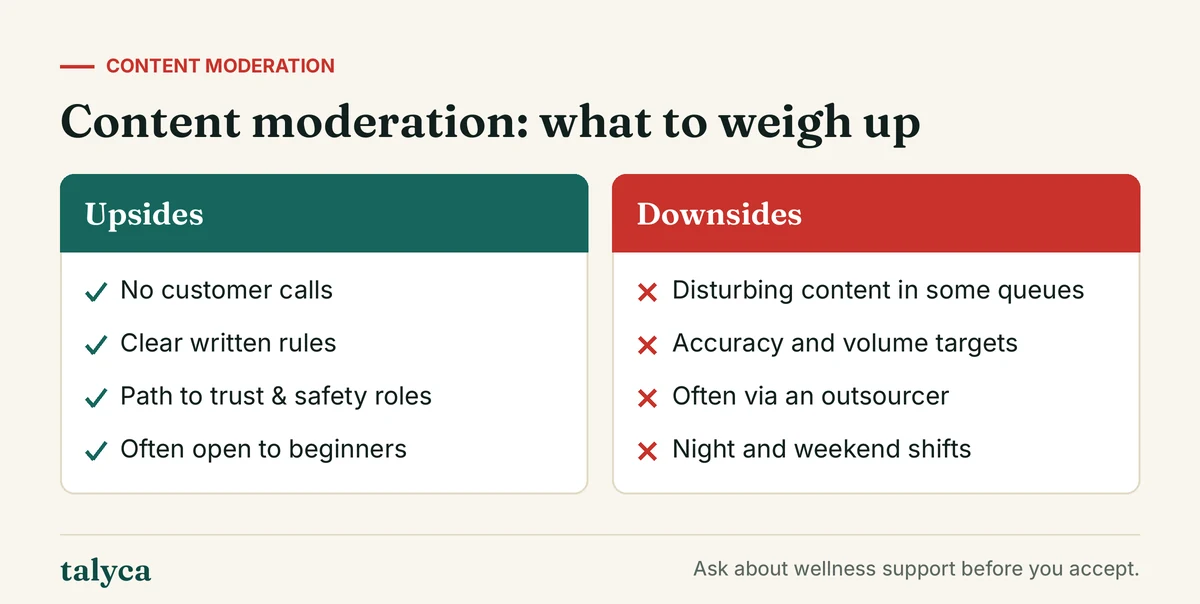
For many people, moderating marketplace listings or community comments is calm, structured work. Queues that handle violent or abusive material are a different job, and responsible employers say so openly in the interview. Accuracy is measured closely: a quality team re-checks a sample of your decisions.
Questions to ask about wellness support
If a role may involve graphic content, ask before you accept:
- What type of content will I review, and can I see examples of the guidelines?
- Is there access to counselling or an employee assistance program?
- Are there scheduled wellness breaks, and can I step away from a queue?
- Do tools blur or grey out images by default?
- Can I move to a different queue if needed?
Be realistic about yourself. If you already know that certain content affects you strongly, look for roles focused on text, listings or ads rather than user-generated video. There is no shame in choosing a calmer queue.
How hiring works
Much moderation work is done through outsourcing companies on behalf of platforms. Hiring usually includes an online application, an assessment (reading comprehension, policy application to sample cases, sometimes a language test) and an interview. Some roles require a second language or familiarity with a specific market.
What helps your application:
- Evidence of careful, consistent work – data entry, quality checks, proofreading.
- Familiarity with online communities and how platforms work.
- A calm, factual writing style in your answers.
- Languages beyond English, especially French.
Our guide to applying for remote jobs covers resumes, tests and interviews in detail.
Where it can lead
Moderation experience leads to trust and safety analyst roles, policy writing, quality assurance, fraud investigation and community management. People who document patterns they notice – new scam formats, gaps in the guidelines – and share them constructively are the ones who move up.
Watch out for fake “review” jobs: offers to “rate products” or “review apps” for pay, with deposits to unlock tasks, are task scams, not moderation jobs. Read how task scams work.
Common questions
Do content moderators need experience?
Many entry-level moderation roles don’t require previous moderation experience. Employers look for careful reading, consistent judgment and sometimes a second language.
Is content moderation full-time?
Both full-time and part-time roles exist, often with shifts covering evenings and weekends because platforms run around the clock.
Can I choose which content I review?
Not always, but you can ask which queues the role covers before you accept, and some employers allow moves between queues.
More on this topic: our guide Entry-Level Remote Jobs in Canada: Starting Without Experience puts this article in context.